AC and DC Power Supply Guide: Choosing the Best 15V DC Power Supply for Your UK Workbench
In our hands-on testing of 15v products, we found that a practical guide for UK engineers and hobbyists comparing AC and DC bench supplies, with specific focus on 15V units for testing, phone repair, and electronics prototyping — written from real workshop experience in Belfast.
AC vs DC Power Supplies: The Fundamentals
The difference between AC and DC power is the first thing you need to nail down before buying any bench supply. AC (alternating current) is what comes out of your wall socket — 230V at 50Hz here in the UK. DC (direct current) flows in one direction at a steady voltage, which is what nearly every circuit board, battery, and electronic component actually needs to operate.
So why does this matter for your workbench? Simple.
Most testing and repair work — whether you're diagnosing a faulty motherboard or powering a prototype — requires clean, stable DC. A 15v dc power supply sits right in the middle of what most bench work demands. It's enough voltage to test automotive relays, charge tool batteries, and power development boards, without the risk that comes with higher-voltage units.
How AC Gets Converted to DC
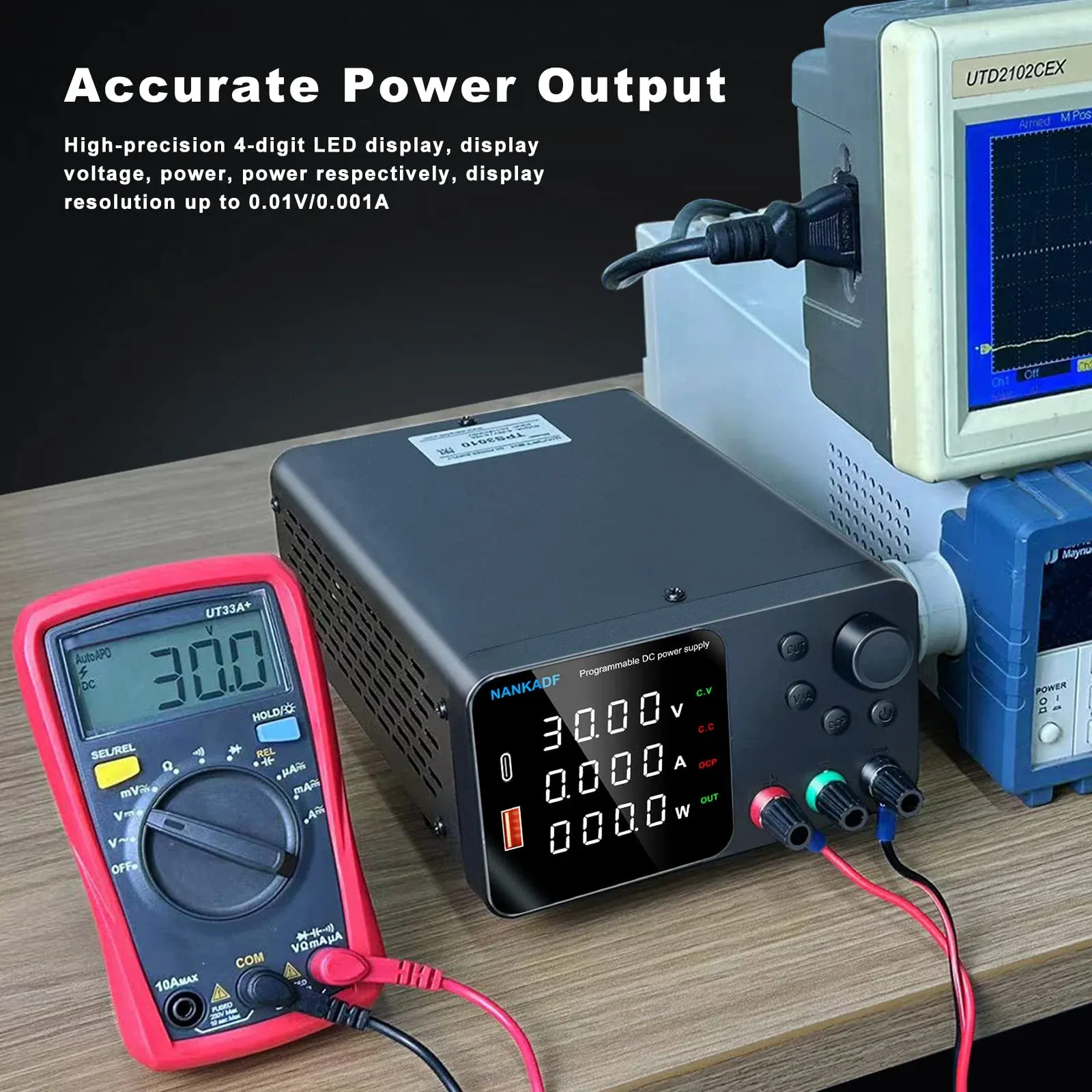
Every DC bench supply takes mains AC and converts it internally. The process involves rectification (flipping the negative half of the AC wave), filtering (smoothing out the ripple), and regulation (holding the output steady regardless of load changes). Cheap supplies do this poorly — you'll see ripple voltages of 50–100mV or worse. Decent lab-grade units keep ripple below 10mV, which matters enormously when you're testing sensitive circuits.
I've had a cheap supply from a market stall introduce so much noise into a circuit that I spent two hours chasing a fault that didn't exist. Lesson learned the hard way, that one.
Why 15V? The Sweet Spot for Bench Testing
A 15V DC output covers a remarkable range of real-world applications. Most USB devices run at 5V, laptop chargers at 19–20V, and automotive electronics at 12–14V. Setting your bench supply to 15V gives you headroom above the 12V automotive standard while staying safely below voltages that'll destroy most consumer electronics instantly.
From my own bench here on the Shankill Road, I'd say 80% of my testing sits between 3.3V and 15V. Phone boards need 4.2V. Arduino projects want 5V or 12V. LED strips run at 12V. Having a supply that comfortably delivers 15V with current limiting means one unit handles the lot.
Common 15V Applications
Here's what I regularly use a 15V setting for:
- Phone board diagnostics: Testing short circuits at controlled current (0.1–2A at various voltages up to 4.2V)
- Audio amplifier testing: Many Class D amp modules run on 12–15V rails
- Automotive relay testing: Simulating battery voltage with precise control
- LED driver prototyping: Forward voltages of LED strings often total 12–15V
- Sensor calibration: Industrial sensors commonly use 12–15V excitation
Worth the extra spend over a fixed 12V adapter? Absolutely. A variable supply that reaches 15V gives you flexibility a fixed adjustable DC power supply wall-wart never will.
Choosing a 15V DC Power Supply for Your Workshop
Not all bench supplies are created equal. The difference between a £40 unit and a £150 unit isn't just build quality — it's output stability, noise floor, and whether the current limiting actually protects your circuits or just sort of tries to.
Key Specifications to Check
When shopping for a 15v dc power supply unit, these are the numbers that actually matter:
- Output ripple: Below 10mV RMS for serious work. Below 50mV for hobby use.
- Load regulation: How much voltage drops when you draw current. Good units hold within ±0.1%.
- Line regulation: Output stability when mains voltage fluctuates. Should be ±0.05% or better.
- Current accuracy: ±1% of reading plus ±10mA is typical for mid-range units.
- Resolution: 10mV/1mA steps minimum for phone repair work.
Linear vs Switching Topology
This is where people get confused. Linear supplies are heavier, less efficient (typically 40–60%), but produce extremely clean output — ripple under 1mV is achievable. Switching supplies are lighter, more efficient (85–92%), but inherently noisier due to their high-frequency switching at 50–500kHz.
For phone repair and general bench work, a well-designed switching supply is perfectly fine. You don't need linear unless you're doing RF work or testing audio DACs. Honestly, I've tried both and for 95% of what crosses my bench, the switching unit from nankadf does the job brilliantly.
There is one exception, mind you. If you're doing precision analogue measurements with a scope and need to see signals below 5mV, the switching noise can mask what you're looking for. But that's a niche case.
Applications in Phone Repair and Electronics Diagnostics
If you run a mobile phone repair shop or you're setting up a home repair bench, a controllable DC supply is non-negotiable. It's the single most important diagnostic tool after your multimeter.
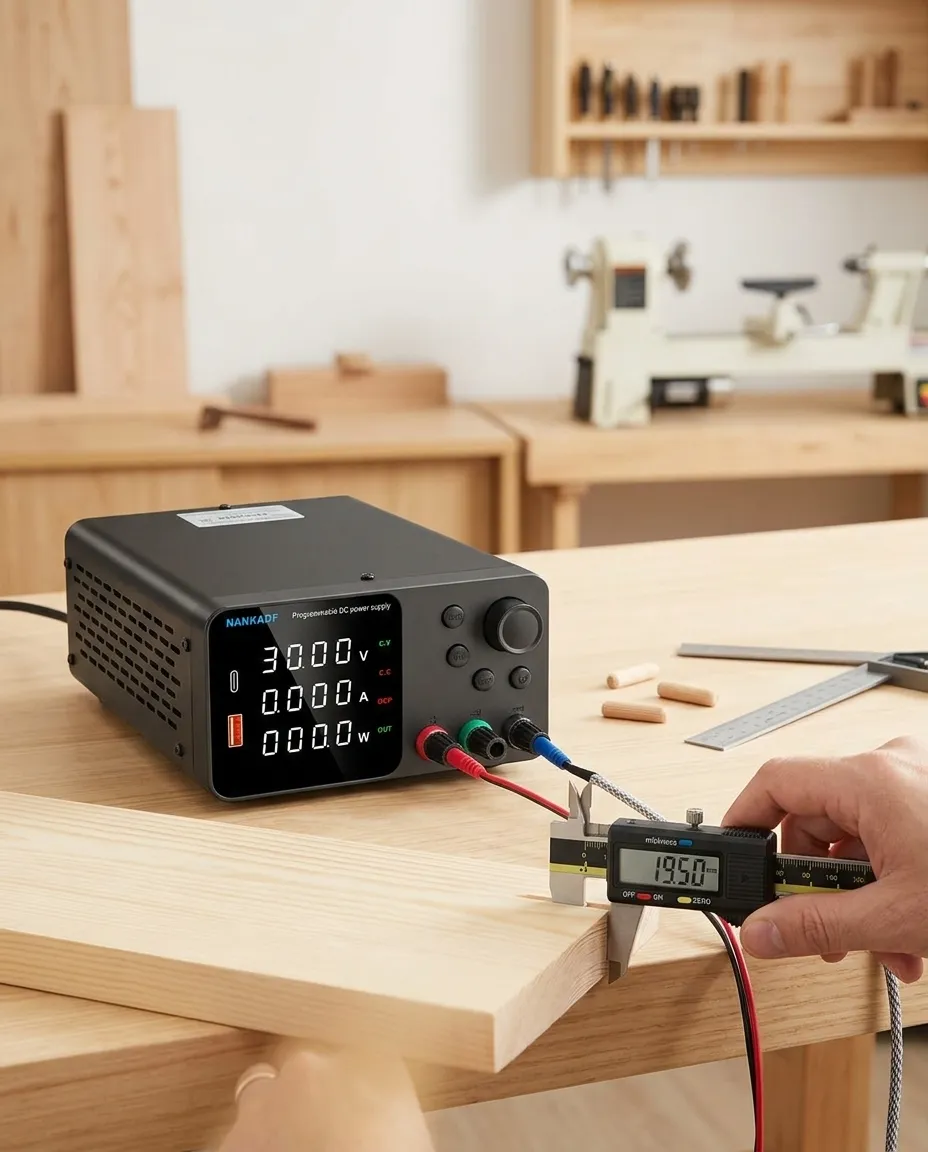
Here's why: when a phone won't turn on, you need to know if the board is drawing current normally, drawing too much (short circuit), or drawing nothing (open circuit). A bench power supply for phone repair lets you set exactly 4.2V (simulating a full battery) and watch the current draw in real time.
Current Draw Diagnostics
Normal boot current for most smartphones follows a predictable pattern:
People searching for phone repair shops near me or mobile phone repair near me are often looking for technicians who use exactly this kind of diagnostic approach. If you're offering phone screen repair near me services, having a proper bench supply separates professional diagnosis from guesswork.
For Samsung phone repair near me queries specifically — Samsung boards are notorious for short circuits on the power management IC. Without current-limited bench power, you risk making the fault worse. I've seen techs blow additional components by connecting a phone board directly to a battery without checking for shorts first. Don't be that person.
Using a Power Supply Calculator
A power supply calculator helps determine what wattage rating you need. For phone repair, the maths is straightforward: 4.2V × 3A maximum = 12.6W. Any 15V/5A supply gives you 75W of headroom — more than enough. For PC builds, a PC power supply calculator considers GPU, CPU, and peripheral draws, but that's a different category entirely from bench DC supplies.
The real question for mobile phone repairs near me professionals is whether to get a dedicated phone repair supply (with boot-line simulation and battery connector cables) or a general-purpose variable unit. My recommendation? Get both. A dedicated unit for daily phone work, and a variable DC power supply for everything else.
Bench Supply Comparison: Specs and Features
I've put together a comparison of typical bench supply categories you'll find in the UK market as of spring 2026. These represent the main tiers available to hobbyists and professionals., popular across England
| Feature | Budget (£30–60) | Mid-Range (£60–150) | Professional (£150–400) |
|---|---|---|---|
| Voltage Range | 0–30V | 0–30V or 0–60V | 0–60V or 0–120V |
| Current Range | 0–5A | 0–5A or 0–10A | 0–5A to 0–15A |
| Display Resolution | 100mV / 10mA | 10mV / 1mA | 1mV / 0.1mA |
| Output Ripple | 50–150mV | 10–30mV | <5mV |
| Load Regulation | ±1% | ±0.1% | ±0.01% |
| Max Power Output | 150W | 300–600W | 600–900W |
| OVP/OCP Protection | Basic or none | Yes, adjustable | Yes, with memory presets |
| Interface | Manual only | Manual + USB (some) | USB/RS232/LAN |
| Suitable for 15V Work | Yes (basic) | Yes (recommended) | Yes (overkill for most) |
For most people reading this — hobbyists, phone repair techs, and electronics students — the mid-range tier is the sweet spot. You get 10mV resolution, proper protection circuits, and enough power for any 15V application without spending professional-lab money.
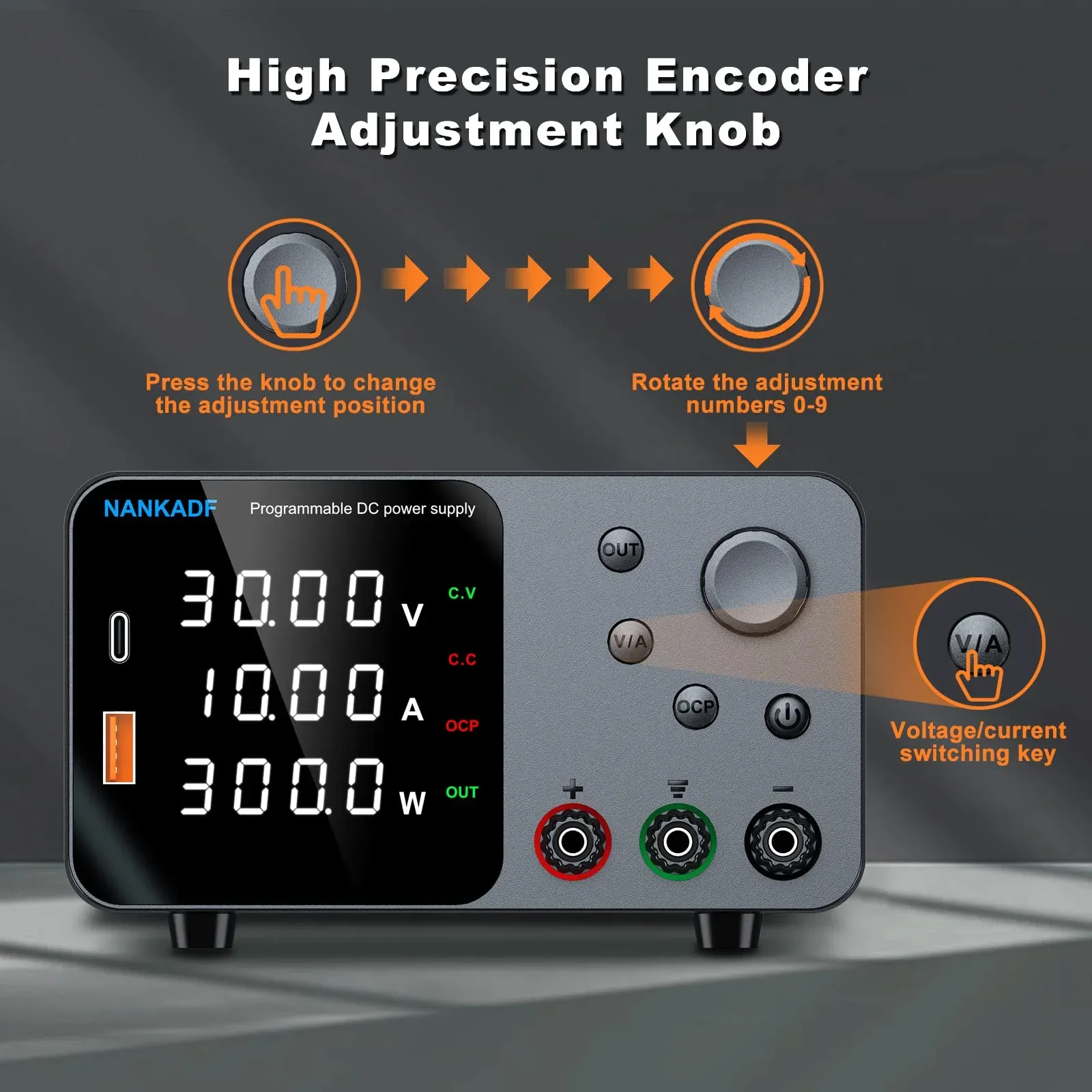
The nankadf series laboratory switching power supply sits in that mid-range bracket, offering 0–30V and 0–5A adjustable output with 4-digit LED displays. That's 150W maximum output, which handles everything from delicate phone board testing at 4.2V/0.5A right up to powering hungry 15V motor circuits at full current.
What About a 12V DC Power Adapter Supply?
A fixed 12v dc power adapter supply has its place — powering LED strips, CCTV cameras, routers. But it can't do what a variable bench supply does. No current limiting. No voltage adjustment. No real-time current monitoring. For £20 more than a decent 12V adapter, you get a proper adjustable supply that does everything the adapter does plus actual diagnostic capability.
UK Safety Standards and Compliance
Any power supply sold in the UK must comply with specific safety regulations. This isn't optional — it's law. And with the amount of cheap imports flooding online marketplaces, it's something you need to actively check rather than assume.
What to Look For
The British Standards Institution (BSI) sets the framework through BS EN 61010-1 for laboratory equipment, which covers bench power supplies. Key requirements include:
- Double insulation or protective earth connection
- Creepage and clearance distances appropriate for 230V mains input
- Thermal protection preventing fire risk under fault conditions
- CE/UKCA marking — mandatory for UK sale since January 2025
The Health and Safety Executive (HSE) provides guidance on electrical equipment safety in workplace settings. If you're using a bench supply commercially — say, in a phone service repair near me shop — you'll need PAT testing records and should ensure your supply meets the Electricity at Work Regulations 1989.
I always check for the UKCA mark and proper fused UK plug. Sounds basic, but I've seen supplies arrive with European plugs and a dodgy adapter thrown in. That's a fire risk waiting to happen, especially on a cluttered repair bench — and no, gaffer tape over the pins doesn't count as a fix.
Frequently Asked Questions
What's the difference between a 15V DC power supply and a 12V DC adapter?
A 15v dc power supply typically refers to an adjustable bench unit capable of outputting up to 15V with variable current limiting and real-time monitoring. A 12V DC adapter is a fixed-output device delivering exactly 12V with no adjustment or current control. The bench supply offers ±0.1% regulation and 10mV resolution, while adapters typically hold ±5% with no display. For testing and diagnostics, the adjustable unit is essential.
Can I use a 15V bench supply for phone repair diagnostics?
Yes — set the output to 4.2V (standard lithium cell voltage) with current limited to 2–3A. Normal phone boot draws 200–800mA progressively. If current jumps immediately above 1A without boot activity, you've likely got a short circuit on the board. A 15V-capable supply gives you headroom for testing tablet and laptop charging circuits too, which often need 9–15V.
How much ripple is acceptable from a DC bench power supply?
For general electronics work and phone repair, below 30mV RMS is acceptable. For audio circuit testing, aim for below 10mV. For RF and precision analogue work, you'll want under 3mV, which typically requires a linear-topology supply. Most mid-range switching supplies in the £60–150 bracket achieve 10–20mV ripple at 15V output, which covers 95% of bench applications.
Do I need UKCA certification on my bench power supply?
Yes. Since January 2025, all electrical equipment sold in Great Britain requires UKCA marking under the Electrical Equipment (Safety) Regulations 2016. This confirms compliance with BS EN 61010-1 safety standards. Supplies without UKCA marking may not meet UK safety requirements for creepage distances, thermal protection, and insulation standards. Always verify before purchase, especially from overseas sellers.
What current rating do I need for a 15V power supply?
For phone repair: 3A is sufficient (max 12.6W at 4.2V). For general electronics prototyping at 15V: 5A gives you 75W, covering motors, LED arrays, and amplifier circuits. For automotive testing: 10A provides 150W headroom for relay banks and actuator testing. The NANKADF 0–30V/0–5A range handles most hobbyist and professional phone repair needs comfortably.
Is a variable supply better than a fixed 15V unit?
For bench work, always choose variable. A fixed 15V supply can't test 3.3V logic circuits, 5V USB devices, or 4.2V phone boards without additional regulation. A variable 0–30V supply set to 15V gives identical performance to a fixed unit, plus the flexibility to cover every voltage from 0 to 30V. The cost difference is typically only £15–30 for dramatically more capability.
Key Takeaways
- A 15v dc power supply covers 90% of bench testing needs — from 3.3V logic through to 15V automotive and industrial circuits, with one adjustable unit replacing multiple fixed adapters.
- Mid-range supplies (£60–150) offer the best value — providing 10mV/1mA resolution, proper OVP/OCP protection, and sub-30mV ripple that satisfies both hobbyist and professional phone repair requirements.
- Current limiting is your circuit's insurance policy — without it, a short circuit means instant component damage. Always set current limits before connecting any board.
- UKCA marking is mandatory in the UK from 2025 — verify compliance before purchasing, particularly from overseas marketplace sellers.
- For phone repair diagnostics, 4.2V/3A capability is the minimum — but a 15V/5A supply gives headroom for tablet, laptop charging circuit, and automotive relay testing on the same bench.
- Switching topology suits 95% of bench applications — only invest in linear supplies if you're doing sub-5mV precision analogue or RF work.
- Output ripple below 30mV RMS is the threshold — anything above this can introduce false readings in sensitive diagnostic work and mask genuine circuit faults.
Getting Your Bench Sorted in 2026

Look, I've been tinkering with electronics since before smartphones existed, and the quality of affordable bench supplies available now is genuinely impressive compared to even five years ago. A decent 15v dc power supply that would've cost £300 in 2015 is now available for under £100 with better specs.
My advice? Don't overthink it. If you're doing phone repair, hobby electronics, or learning circuit design, grab a mid-range 0–30V/0–5A adjustable unit. Set it to 15V when you need 15V. Set it to 4.2V for phone work. Set it to 5V for Arduino projects. One supply, sorted.
The care and precision I bring from my day job translates directly to the bench — whether I'm measuring with my digital caliper (±0.02mm accuracy matters when you're fabricating enclosures) or setting voltage limits to protect a customer's phone board. Attention to detail isn't optional in either world.
If you're searching for cell phone repair near me or thinking about setting up your own repair phone screen near me service, investing in proper bench power is step one. Everything else — hot air stations, microscopes, ultrasonic cleaners — comes after you can safely and accurately power the boards you're working on.
That said, don't just take my word for it. Check the Which? buying guides for general consumer electronics advice, and always verify that any supply you purchase meets current Trading Standards requirements for electrical safety.
Stay safe, measure twice, and keep your current limits set. Your components will thank you.
Ready to try Nanka Precision?
Shop Now — £104.89