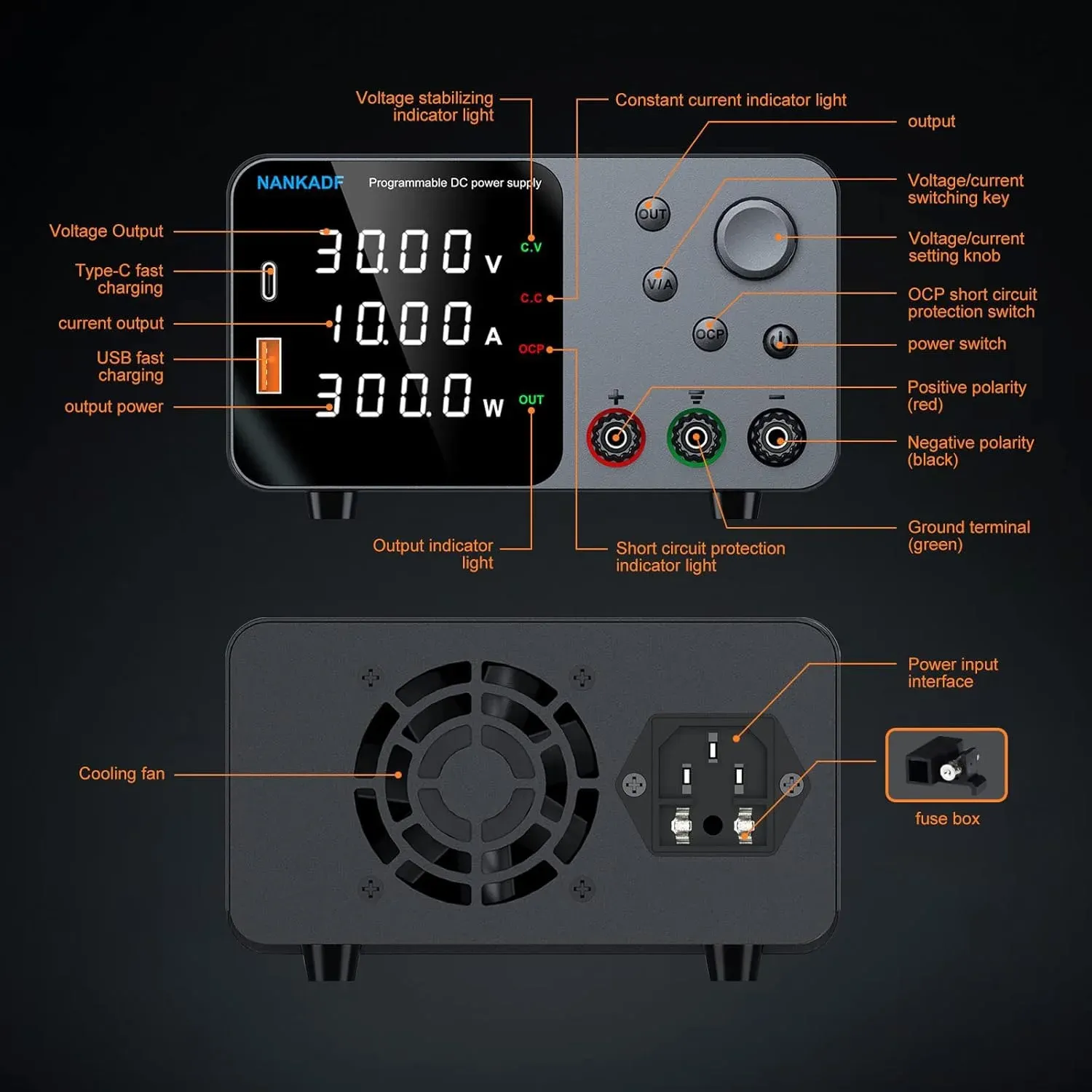
The Ultimate DC Power Supply Guide: From 5V to 24V Adapters and Power Calculation Tips
A practical, no-nonsense guide to choosing the right voltage for your electronics projects — whether you're powering a phone repair bench in Belfast or building your first robotics rig at the kitchen table.
Understanding DC Power Supply Basics
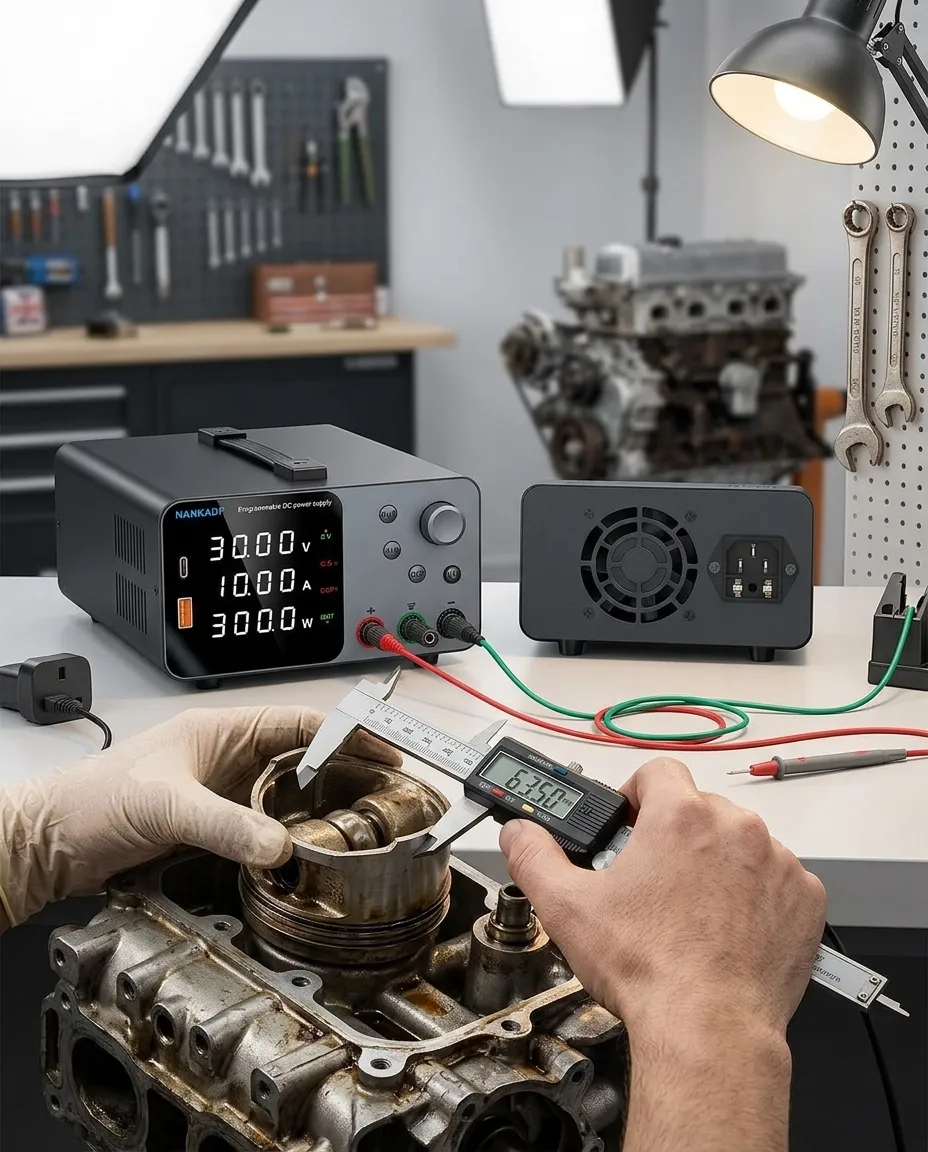
A dc power supply converts mains AC voltage (230V in the UK) into a stable, regulated direct current output suitable for electronic circuits. That's the short version. The longer version? It's the single most important piece of kit on your bench — get it wrong and you're frying components before you've even started troubleshooting.
I've been working with power electronics for years now, and honestly, the number of times I've seen folk plug a 19V laptop adapter into a 12V LED strip still makes me wince. The fundamentals matter.
DC supplies fall into two broad camps: linear regulated and switch-mode. Linear supplies are heavy, run warm, but produce exceptionally clean output with minimal ripple — typically under 1mV. Switch-mode power supplies (SMPS) are lighter, more efficient (85–92% typical), and dominate the market in 2026. The trade-off? Slightly more electrical noise on the output, usually 20–50mV ripple depending on quality.
Key Parameters You Need to Know
Every power unit has three critical specs: output voltage, maximum current capacity, and total wattage. Watts = Volts × Amps. Simple enough. But here's where people trip up — your supply needs headroom. Running any supply at 100% rated capacity continuously is asking for thermal shutdown or premature failure. Stay at 70–80% of rated maximum for continuous loads.
Rule of thumb: For a circuit drawing 2A at 12V (24W), select a supply rated for at least 30W — ideally 36W for comfortable margin.
Selecting the Correct DC Power Supply Voltage
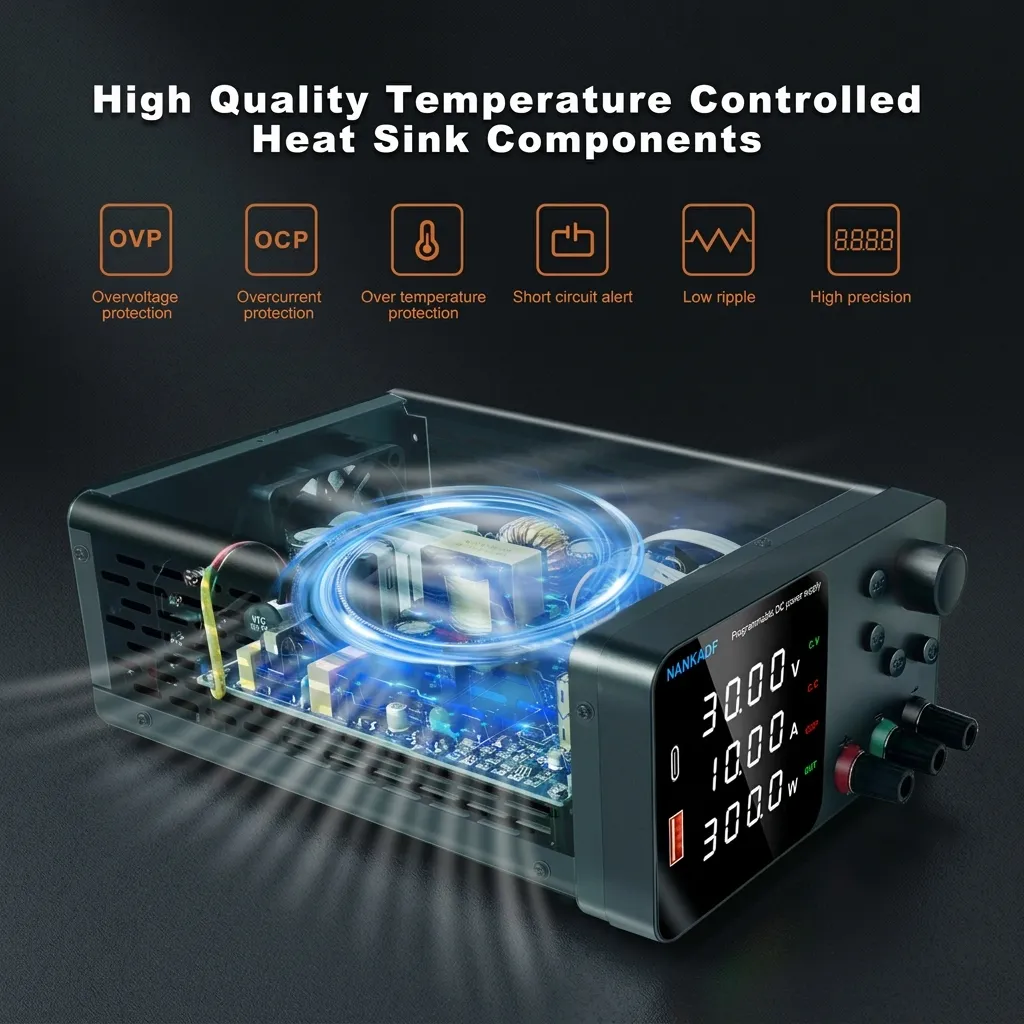
The voltage you need depends entirely on what you're powering. Sounds obvious, but the range of common voltages — 5V, 9V, 12V, 15V, 19V, 24V — each serves distinct applications.
| Voltage | Typical Current Range | Common Applications | Connector Type |
|---|---|---|---|
| 5V | 1A – 3A | USB devices, Raspberry Pi, Arduino, phone charging ICs | USB-A, USB-C, barrel jack |
| 9V | 0.5A – 2A | Guitar pedals, older routers, some test equipment | 2.1mm barrel jack |
| 12V | 1A – 30A+ | LED strips, CCTV, PC peripherals, automotive electronics | 2.5mm barrel, Molex, screw terminal |
| 15V | 1A – 5A | USB-C PD devices, some industrial sensors | USB-C PD, barrel jack |
| 19V | 2A – 6A | Laptop charging, portable monitors, mini-PCs | Proprietary barrel connectors |
| 24V | 1A – 20A | Industrial automation, 3D printers, PLC systems, motor drivers | Screw terminal, DIN rail |
The 12V DC Power Adapter: Still King
The 12V dc power adapter supply remains the most versatile single voltage for bench work. It powers CCTV systems, LED lighting, and most of the phone repair equipment I use daily. If you're setting up a mobile phone repair shop, a decent adjustable bench supply that covers 0–30V will handle everything from battery simulation at 3.7V to powering your hot air station's control board at 24V.
Worth the extra spend on adjustable? Absolutely. A fixed 12V wall wart costs £8–15, but a proper variable DC power supply at £45–120 replaces a drawer full of adapters.
AC-DC vs Isolated DC-DC Converters: What's the Difference?
AC-DC converters take your 230V mains and produce a DC output. That's your standard wall adapter, bench supply, or enclosed chassis unit. DC-DC converters, by contrast, take one DC voltage and transform it to another — stepping up (boost) or stepping down (buck).
When You Need Isolation
Isolated DC-DC converters include a transformer barrier between input and output. This matters for safety-critical applications and anywhere you're working with mixed voltage domains. I learned this the hard way — well, actually, I learned it from reading about someone else's expensive mistake. A fellow on an electronics forum bridged 5V to 12V on a motor driver board because he skipped isolation, and it cost him a laptop. USB isolators exist for a reason.
For phone repair work specifically, isolation between your bench supply and the device under test prevents ground loops that can corrupt diagnostic readings. If you're running a bench power supply for phone repair, galvanic isolation isn't optional — it's essential.
Buck Converters for Robotics and Portable Projects
Building something battery-powered? Buck converters step your battery voltage down efficiently. A 3S LiPo (11.1V nominal) feeding a buck converter gives you clean 5V or 6V for servos and logic boards. The catch? Physical size. Those high-current buck modules rated for 15–20A can be surprisingly bulky — something robotics builders discover quickly when trying to fit everything inside a compact chassis. (Half the battle with small robots is power management, not the code.), a favourite among Britain’s tradespeople
Efficiency comparison: Linear regulator (LM7805) at 12V→5V: ~42% efficient, wastes 7W as heat per amp. Buck converter at same conversion: 88–94% efficient, wastes under 1W per amp.
Power Calculation Tips for Real-World Projects
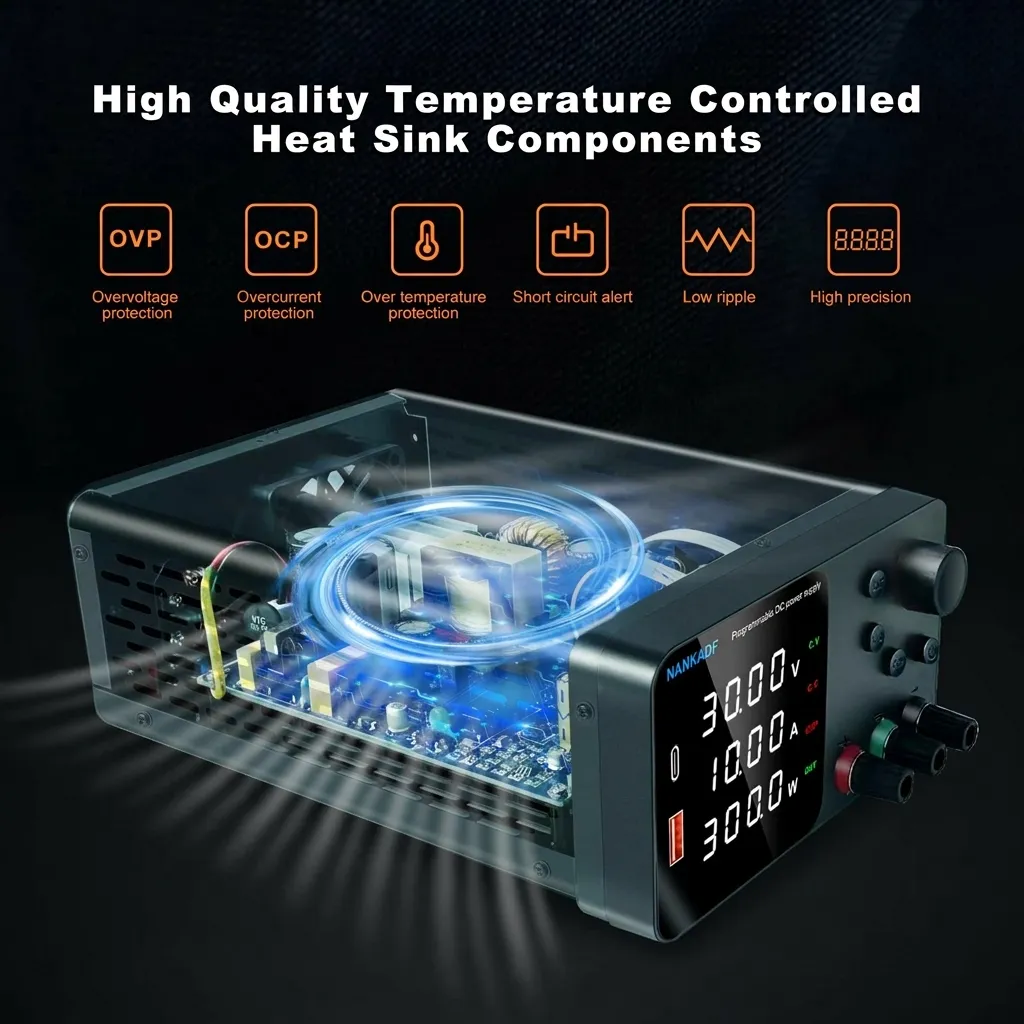
Forget the oversimplified power supply calculator tools you find online — most are designed for gaming PC builds and don't account for inrush current, duty cycles, or derating. Here's how to calculate properly for bench and project work.
Step 1: Sum Your Load Currents
List every component and its maximum current draw. Not typical — maximum. A servo might idle at 200mA but stall at 2.5A. Your calculation must handle the worst case.
Step 2: Apply a Derating Factor
Multiply your total by 1.25 (25% headroom minimum). For supplies that'll run continuously — say, powering a repair bench 8 hours a day — push that to 1.4. Thermal management matters, especially in enclosed spaces.
Step 3: Account for Inrush
Motors, capacitive loads, and hot air stations can draw 3–5× their steady-state current at startup. Your supply needs to handle this without tripping overcurrent protection. A pc power supply calculator won't tell you this — it's bench experience talking.
Example calculation: Phone repair bench with microscope light (12V, 1.5A), soldering station controller (24V, 2A), and USB charging ports (5V, 3A). Total power = 18W + 48W + 15W = 81W. With 1.3 derating: 105W minimum supply capacity needed.
So what's the catch with those cheap "900W" supplies you see online? They're rated at peak, not continuous. A supply advertising 120V/15A (1800W peak) might only sustain 600W continuously before thermal throttling kicks in. Read the continuous rating, not the headline figure.
Bench DC Power Supply vs Fixed Adapters: Which Do You Actually Need?
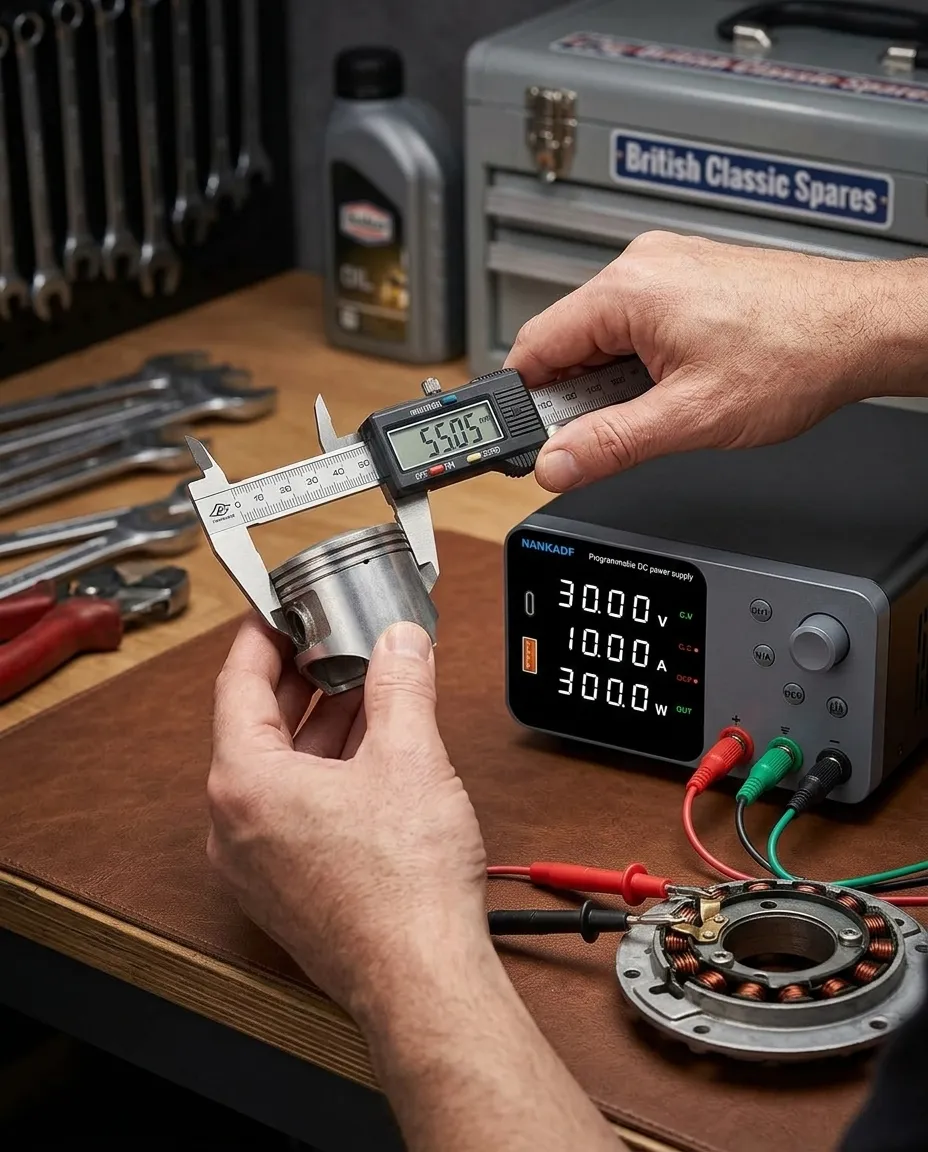
Fixed adapters are cheap and cheerful. Plug in, get your voltage, crack on. But they're single-purpose. An adjustable DC power supply with 0–30V range and 0–5A current limiting transforms how you work.
Here's my honest take after years of using both: if you're doing any kind of repair work — phones, tablets, laptops — a variable bench supply pays for itself within a month. Being able to set exact voltage and current limits means you can safely power a phone motherboard at 3.8V/1A and watch the current draw to diagnose shorts. Can't do that with a wall wart.
Features That Actually Matter
Four-digit LED displays showing voltage and current simultaneously. That's non-negotiable. Coarse and fine adjustment knobs for both V and A. Overcurrent protection (OCP) that you can set precisely. And decent binding posts that accept banana plugs and bare wire without wobbling about.
The nankadf series laboratory switching supplies cover 0–30V at 0–5A, which handles 90% of consumer electronics repair scenarios. For the other 10% — laptop motherboard testing at 19V/4A or industrial motor work at 24V — you'll want something with more headroom. Their higher-spec units push to 120V/15A for specialised applications like electroplating or anodising.
What About PC Power Supplies for Bench Use?
Converting an ATX PC PSU into a bench supply is a popular hack. You get 3.3V, 5V, and 12V rails with decent current capacity — often 20A+ on the 12V rail. Brilliant for powering LED projects or testing car electronics. But you don't get adjustability, and the 12V rail tolerance is ±5%, meaning actual output could sit anywhere from 11.4V to 12.6V. For precision work, that's not good enough., popular across England
UK Safety Standards and Compliance for Power Equipment
Any dc power supply sold in the UK must carry a UKCA mark (or CE mark for Northern Ireland under the Windsor Framework — relevant for those of us here in Belfast). This isn't just bureaucratic box-ticking. It means the unit has been tested against BS EN 62368-1:2020 for audio/video and IT equipment safety.
The Health and Safety Executive provides guidance on electrical equipment in workplaces, including repair shops. If you're running a mobile phone repair business, your bench equipment needs PAT testing annually, and your supply units should meet the requirements outlined in the Electricity at Work Regulations 1989.
For product compliance specifics, the British Standards Institution (BSI) publishes the relevant standards. Key ones for power supplies include:
- BS EN 62368-1:2020 — Safety for audio/video and IT equipment
- BS EN 61558 — Safety of transformers and power supply units
- BS EN 55032 — EMC emissions limits for multimedia equipment
Cheap imports from marketplace sellers often lack proper certification. I've tested units that claimed UKCA compliance but had no documentation to back it up — and that's a conversation you really don't want to have with a HSE inspector. Reputable suppliers like nankadf.co.uk provide properly certified equipment with documentation, which is peace of mind when you're running a professional repair operation.
Working Safely with Higher Voltages
Anything above 50V DC is considered hazardous by UK regulations. If you're working with 120V bench supplies for industrial applications, you need appropriate training and PPE. The Trading Standards framework covers product safety requirements for equipment sold to consumers and professionals alike.
Frequently Asked Questions
What dc power supply do I need for phone repair?
For mobile phone repair, you need an adjustable bench supply covering 0–30V with at least 3A current capacity and 10mA current resolution. This lets you simulate battery voltage at 3.7–4.2V while monitoring current draw to detect short circuits on motherboards. Budget £45–120 for a reliable unit from established brands.
Can I use a laptop charger as a 19V DC power supply?
Yes, a laptop charger outputs regulated 19V DC and can power compatible devices. However, most laptop adapters provide 3–6A (57–114W) and lack current limiting or adjustment. For bench testing, a dedicated adjustable supply is safer because it prevents overcurrent damage. Laptop chargers also lack the fine voltage control needed for precision work.
How do I calculate what size power supply I need?
Multiply your required voltage by maximum current draw to get watts, then add 25–40% headroom. For example, a 12V system drawing 5A needs 60W minimum — select a 75–85W supply for reliable continuous operation. Always use maximum (not average) current figures and account for startup inrush currents, which can be 3–5× steady state.
What's the difference between a regulated and unregulated DC supply?
A regulated supply maintains constant output voltage regardless of load changes — typically ±1% or better. Unregulated supplies (basic transformer + rectifier) can vary 10–20% between no-load and full-load conditions. For any electronics work, regulated supplies are essential. Modern switch-mode units achieve ±0.5% regulation as standard in 2026.
Is a 12V DC power adapter supply safe for LED strips?
Yes, most standard LED strips run on 12V DC and draw 1–5A per 5-metre reel depending on LED density. Match your adapter's current rating to the strip's requirements — a 5050 RGB strip typically draws 3.6A per 5m reel. Use a supply rated for at least 4.5A to allow headroom, and ensure it carries UKCA certification for safety compliance.
Do phone repair shops near me use bench power supplies?
Professional phone repair shops universally use adjustable bench power supplies for motherboard diagnostics. They set voltage to 3.8–4.0V and monitor milliamp-level current draw to identify short circuits before applying full battery power. This technique prevents further damage and is standard practice in Samsung phone repair and iPhone board-level work across UK repair centres.
Key Takeaways
- Match voltage precisely — a 12V device needs a 12V supply; even 1–2V over can destroy sensitive electronics permanently.
- Always overspec current capacity by 25–40% — running at maximum rated current continuously causes thermal stress and shortens supply lifespan.
- An adjustable bench dc power supply (0–30V, 0–5A) covers 90% of consumer electronics repair — it replaces multiple fixed adapters and adds current-limiting safety.
- Isolation matters for safety — use isolated DC-DC converters or supplies with galvanic isolation when working with mixed voltage systems or connected to computers.
- UK compliance requires UKCA marking — check for BS EN 62368-1 certification and avoid uncertified marketplace imports for professional use.
- Switch-mode supplies dominate in 2026 — they offer 85–92% efficiency, lighter weight, and adequate noise performance for most bench applications.
- PC power supply calculators don't replace proper load analysis — account for inrush current, duty cycles, and derating factors that automated tools ignore.
Ready to try Nanka Precision?
Shop Now — £104.89