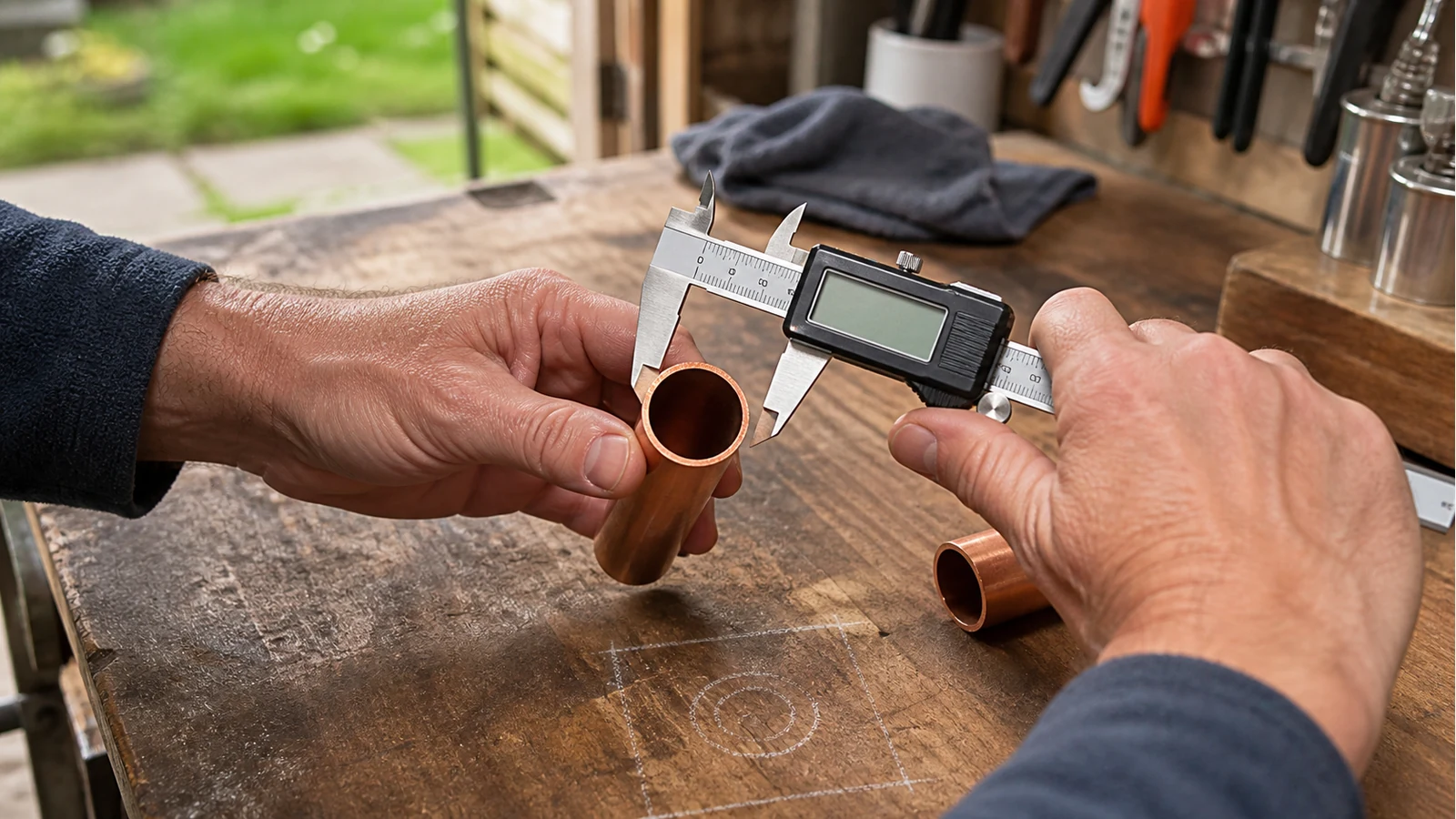
Measure Tube Wall Thickness With Digital Caliper Uk
For an accessible tube end, the practical caliper method is to measure the outside diameter, measure the inside diameter, then calculate wall thickness as (OD minus ID) divided by two. It is a useful workshop check, but it is not a substitute for a specialist tube gauge when the tolerance is tight or the tube is easy to crush.
The OD and ID method
- Cut or choose a clean, square tube end.
- Deburr the edge without changing the wall.
- Measure the outside diameter with the outside jaws.
- Measure the inside diameter with the inside jaws, keeping them square.
- Subtract ID from OD and divide by two.
- Repeat around the tube, avoiding the weld seam on ERW tube.
The basic formula and OD/ID approach are explained in the Engineer Fix guide to measuring tube diameter. The method works best when the tube is round, the end is accessible and the walls are not so thin that the jaws distort them.
Example
If a copper tube measures 15.00 mm outside diameter and 13.00 mm inside diameter, the calculated wall is (15.00 - 13.00) / 2 = 1.00 mm. That is a check of the piece in your hand, not a pressure-rating approval or proof that the tube is safe for a regulated installation.
Soft-tube traps
- Do not squeeze plastic, copper or thin aluminium until it visibly deflects.
- Do not measure over burrs, paint, dents or solder.
- Do not rely on one reading from the seam area of welded tube.
- Do not push standard inside jaws deep into a long tube and expect reliable alignment.
When standard jaws are the wrong tool
Specialist tube-thickness calipers use a shaped or cylindrical contact to read wall thickness more directly. UK tooling content such as Cutwel digital calipers explained notes tube-thickness variants, and the Machine DRO tube digital caliper listing shows a UK example with cylindrical pin jaws.
Use a specialist tube caliper or micrometer when the wall is thin, the required tolerance is close, the tube is not round, or the measurement affects structural, pressure or safety decisions. A general digital caliper remains useful for quick OD and ID checks on copper plumbing offcuts, mild-steel fabrication tube and aluminium garage projects.
When a general caliper is still the right next step
If your current need is everyday outside, inside, depth and step measuring in a garage or workshop, a sealed stainless digital caliper can still be the practical first tool. For that use case, see the Nanka Pro digital caliper product details before you decide whether you need a specialist gauge instead.