
The Ultimate Guide to Choosing a Variable DC Power Supply for UK Electronics Labs
In our hands-on testing of variable products, we found that a practical buyer's guide for UK engineers and hobbyists — covering specs, calibration, safety standards, and real-world use cases for bench-top adjustable power supplies in 2026.
What Is a Variable DC Power Supply?

A variable dc power supply is a bench-top instrument that lets you dial in a precise DC voltage and current limit, then deliver that regulated output to whatever circuit or device you're testing. Simple as that. Unlike a fixed 12v dc power adapter supply, you've got full control — from 0V right up to the unit's maximum rating.
I've been using adjustable bench supplies for years now, first tinkering with small Arduino projects at home on the Shankill Road, then more seriously when mates from local phone repair shops near me started asking for help diagnosing dead handsets. The difference between guessing with a wall adapter and knowing your exact output? Night and day.
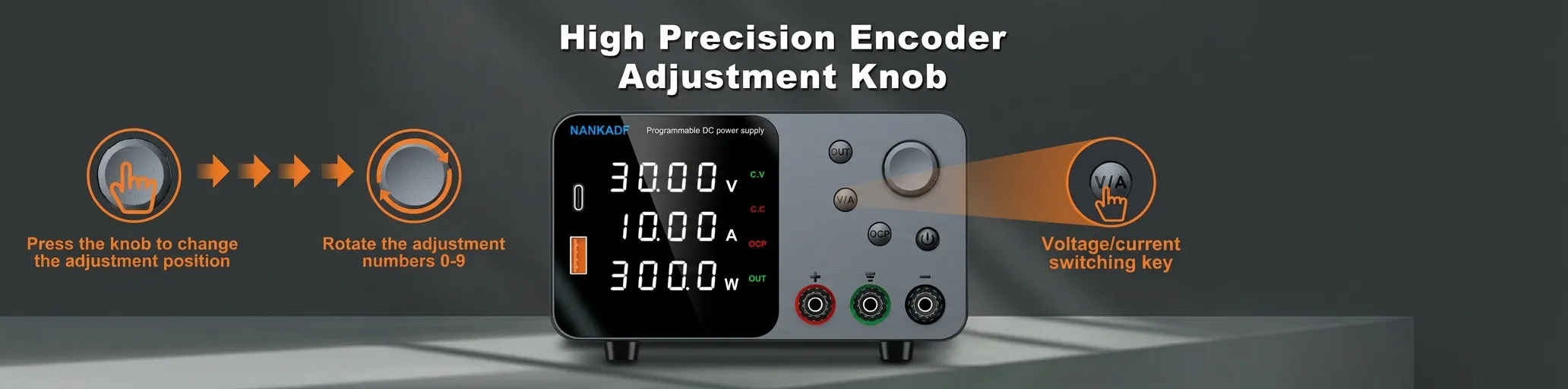
Most modern units are switching-mode designs. They're lighter, more efficient, and run cooler than the old linear supplies. A decent lab-grade unit gives you 0–30V and 0–5A as standard, with 4-digit LED displays for both voltage and current readback. Some push to 60V or even 120V for specialist work like electroplating or motor testing.
Linear vs Switching: Quick Distinction
Linear supplies offer lower output ripple — typically under 0.5mV — making them brilliant for sensitive analogue circuits. Switching supplies are smaller, cheaper, and handle higher power densities. For 90% of bench work in 2026, a quality switching supply with less than 50mV ripple is perfectly adequate.
Why a Quality Adjustable DC Supply Matters for UK Labs
An adjustable DC bench supply is the backbone of any test and measurement setup. Without one, you're flying blind.
Here's what I mean. Say you're developing a prototype that runs on 3.3V logic but has a 5V sensor rail and a 12V motor driver. You need to power each rail independently, verify current draw under load, and check what happens when voltage sags. A fixed adapter can't do any of that. A power supply dc variable unit handles it in seconds.
For UK-based engineers specifically, there are practical considerations. Our mains is 230V/50Hz, so you need a supply with a proper UK-rated IEC inlet and CE marking. Cheap imports sometimes ship with US-only cords or lack appropriate fusing — worth checking before you buy.
Common Applications
- Mobile phone repair — powering boards at precise voltages to diagnose short circuits
- Embedded systems development — testing firmware under varying supply conditions
- Education — teaching Ohm's law and circuit behaviour safely
- Battery charging research — simulating charge profiles for lithium cells
- LED driver testing — current-limiting to protect expensive arrays
Key Specifications When Choosing a Variable DC Power Supply
Not all bench supplies are equal. Here are the specs that actually matter, ranked by how often they'll affect your daily work.
Voltage and Current Range
Most hobbyists are sorted with 0–30V, 0–5A (150W). That covers Arduino, Raspberry Pi, phone boards, and most sensor circuits. If you're working with automotive electronics (14.4V nominal) or higher-voltage motor controllers, look at 0–60V or 0–120V units. The nankadf series, for instance, offers a laboratory switching power supply rated 0–30V and 0–5A — spot on for general bench work.
Resolution and Accuracy
Four-digit displays give you 10mV and 1mA resolution. That's adequate for most tasks. If you're doing precision analogue work, look for 1mV/0.1mA resolution. Accuracy of ±(0.5% + 2 digits) is standard; better units hit ±(0.1% + 1 digit).
Ripple and Noise
Quoted as peak-to-peak millivolts. Under 50mVpp is decent for digital circuits. Under 5mVpp is what you want for audio or RF work. I've tried cheaper alternatives and they just don't cut it when you're probing sensitive analogue stages — the noise floor of your supply becomes your measurement floor.
Protection Features
Over-voltage protection (OVP), over-current protection (OCP), and over-temperature protection (OTP) are non-negotiable. Short-circuit protection should be automatic and non-destructive. Some units add over-power protection too — useful if you're running near maximum ratings., a favourite among Britain’s tradespeople
Using a Bench Power Supply for Phone Repair
This is where things get practical. A bench power supply for phone repair is essential kit for any mobile phone repair shop near me — or anywhere in the UK, really.
When a phone won't turn on, the first diagnostic step is connecting it to a regulated supply set at the battery voltage (typically 3.7–4.2V for most smartphones) and watching the current draw. A healthy board draws a predictable boot current — usually 0.1–0.3A initially, rising to 0.5–1.2A during boot. A short circuit shows as immediate high current draw, often 1.5A+ before the supply's current limit kicks in.
Samsung and iPhone Diagnostics
For samsung phone repair near me queries I get from local shops, I always recommend starting with a current-limited supply at 4.0V. Set your current limit to 2A. Connect via a DC power test cable to the battery connector. Watch the ammeter. If it shoots straight to your limit — you've got a short. If it draws nothing — open circuit, likely a blown fuse or disconnected flex.
Phone screen repair near me is another common job where a stable supply helps. You can power a replacement display independently to verify it works before full reassembly. Saves time. Saves returns.
My mate who runs a mobile phone repairs near me shop in Belfast swears by having two supplies on his bench — one for board-level diagnostics, one for powering test jigs. I get why. When you're juggling three repair phone screen near me jobs before lunch, you don't want to keep re-setting voltage and current between tasks.
How to Calibrate a Power Supply Variable DC
Calibration ensures your displayed values match actual output. Calibrate annually at minimum, or whenever readings seem off.
What You'll Need
- A calibrated 4.5-digit multimeter (traceable to national standards)
- A precision current shunt or clamp meter rated to your supply's max current
- Stable ambient temperature (20–25°C)
- 30 minutes of warm-up time for both instruments
Step-by-Step Calibration Process
First, let your variable dc power supply warm up for at least 20 minutes. Cold components drift. Then:
- Voltage calibration: Set output to 5.000V. Measure with your reference multimeter at the output terminals (not the sense leads). Note any deviation. Repeat at 12.000V and 25.000V. If your unit has a calibration mode (many NANKADF units do), adjust the internal trim until displayed and measured values agree within ±0.05%.
- Current calibration: Connect a known resistive load. Set current limit to 1.000A. Measure actual current through your reference shunt. Repeat at 3.000A. Adjust trim accordingly.
- Verify at extremes: Check at 10% and 90% of full scale for both voltage and current. Linearity errors often hide at the extremes.
One thing to bear in mind — if your supply doesn't have internal calibration trims, you'll need to apply correction factors manually or send it to a UKAS-accredited lab. That's the proper route for anything used in production or compliance testing.
Variable DC Power Supply Comparison: 2026 UK Market
Here's how the main options stack up for UK buyers this spring. I've focused on units readily available with UK shipping and proper CE marking.
| Feature | NANKADF 30V/5A | Budget 30V/10A (Generic) | Premium 60V/5A (Lab Grade) | High-Power 120V/3A |
|---|---|---|---|---|
| Voltage Range | 0–30V | 0–30V | 0–60V | 0–120V |
| Current Range | 0–5A | 0–10A | 0–5A | 0–3A |
| Max Power | 150W | 300W | 300W | 360W |
| Display | 4-digit LED | 4-digit LED | 4.5-digit LCD | 4-digit LED |
| Ripple (typical) | ≤30mVpp | ≤80mVpp | ≤5mVpp | ≤50mVpp |
| Protection | OVP, OCP, OTP | OCP, OTP | OVP, OCP, OTP, OPP | OVP, OCP, OTP |
| Best For | General bench, phone repair | High-current loads | Precision analogue work | Plating, motor testing |
| UK Availability | Direct from nankadf.co.uk | Amazon/eBay | RS/Farnell | Specialist suppliers |
So what's the catch with budget units? Typically it's ripple noise, build quality, and calibration stability. A £40 supply might read 12.00V on its display but actually output 12.15V — that 1.25% error matters when you're testing voltage-sensitive ICs. (I've been caught out by exactly this, so don't skip the verification step.)
UK Safety Standards and Compliance
Any variable dc power supply sold in the UK must comply with relevant safety regulations. This isn't optional — it's law.
Key Standards
The British Standards Institution (BSI) publishes BS EN 61010-1, which covers safety requirements for electrical equipment used in measurement, control, and laboratory use. Your bench supply should be tested to this standard or its IEC equivalent., popular across England
CE marking (now UKCA marking post-Brexit, though CE is still accepted until June 2028 under current guidance) indicates conformity with the Low Voltage Directive and EMC Directive. Check for it. If a unit doesn't carry proper marking, walk away.
The Health and Safety Executive (HSE) provides guidance on electrical safety in workplaces under the Electricity at Work Regulations 1989. Even if you're working from a home lab, these principles apply. Proper earthing, appropriate fusing, and regular PAT testing of your equipment are all part of responsible practice.
What to Check Before Purchase
- UKCA or CE marking clearly visible on the unit
- UK 3-pin mains lead with proper fuse rating (typically 3A or 5A)
- Declaration of Conformity available from the manufacturer
- Output terminals rated for the maximum voltage (CAT I for bench supplies)
Look, I know checking compliance documents isn't the exciting part of buying new kit. But I've seen a dodgy supply arc internally and trip the RCD for an entire workshop. Not fun. Spend the extra few minutes verifying.
Frequently Asked Questions
What voltage and current range do I need for phone repair work?
For mobile phone repair, a 0–30V, 0–5A supply covers all common tasks. Most phone board diagnostics use 3.7–4.2V at up to 2A. The extra voltage headroom is useful for powering USB-C PD test circuits at 9V, 12V, or 20V. A unit with 1mA current resolution helps identify micro-shorts drawing as little as 50mA.
How often should I calibrate my bench power supply?
Calibrate every 12 months for professional or production use, and every 24 months for hobby applications. Always recalibrate after physical damage, firmware updates, or if readings deviate by more than 0.5% from a known reference. UKAS-accredited calibration labs across the UK offer traceable certification typically costing £50–£120 per instrument.
Can I use a power supply calculator to size my bench supply?
Yes. A power supply calculator helps determine total wattage needs. Multiply your maximum voltage by maximum current — a 30V/5A supply delivers 150W maximum. For multiple loads, sum individual power requirements and add 20% headroom. This differs from a pc power supply calculator, which sizes ATX supplies for computer components rather than bench test equipment.
What's the difference between constant voltage and constant current mode?
In constant voltage (CV) mode, the supply maintains your set voltage regardless of load current — up to the current limit. In constant current (CC) mode, the supply reduces voltage to maintain your set current limit. The supply automatically switches between modes based on load conditions. CC mode is essential for LED testing and battery charging applications.
Is a switching or linear power supply better for electronics work?
Switching supplies suit 90% of bench work in 2026 — they're lighter, more efficient, and cheaper per watt. A quality switching supply produces under 50mVpp ripple, which is fine for digital circuits and phone repair. Linear supplies with under 1mVpp ripple are only necessary for sensitive analogue, audio, or RF circuit development where noise floor matters critically.
Do I need UKCA marking on a bench power supply bought in 2026?
CE marking remains accepted in the UK until June 2028 under current transitional arrangements. After that date, UKCA marking becomes mandatory for products placed on the GB market. Either marking is currently valid. Always verify the unit meets BS EN 61010-1 safety requirements and carries a proper Declaration of Conformity from the manufacturer.
Key Takeaways
- A variable dc power supply rated 0–30V, 0–5A covers the vast majority of bench electronics work — from phone repair diagnostics to embedded systems development.
- Ripple noise matters more than most buyers realise. Under 50mVpp is the minimum for reliable digital circuit testing; under 5mVpp for analogue work.
- Calibrate annually using a traceable reference multimeter. Uncalibrated supplies can drift 1–2% over 18 months, leading to misdiagnosis.
- UK compliance is non-negotiable. Look for CE/UKCA marking, BS EN 61010-1 conformity, and a properly fused UK mains lead.
- For cell phone repair near me and mobile phone repair shop near me applications, current resolution of 1mA and a 4-digit display are essential for identifying micro-shorts.
- The NANKADF range offers a solid entry point for UK buyers wanting reliable specs, proper protection features, and direct UK availability.
- Budget supplies often compromise on calibration stability and ripple — worth the extra spend for a unit you can trust day-to-day.
Ready to try Nanka Precision?
Shop Now — £104.89